Monday, September 3, 2018

Sunday, September 2, 2018
Michael Cohen under investigation for $20m bank fraud report
Federal investigators are considering filing charges by the end of August on Donald Trumps former right-hand man
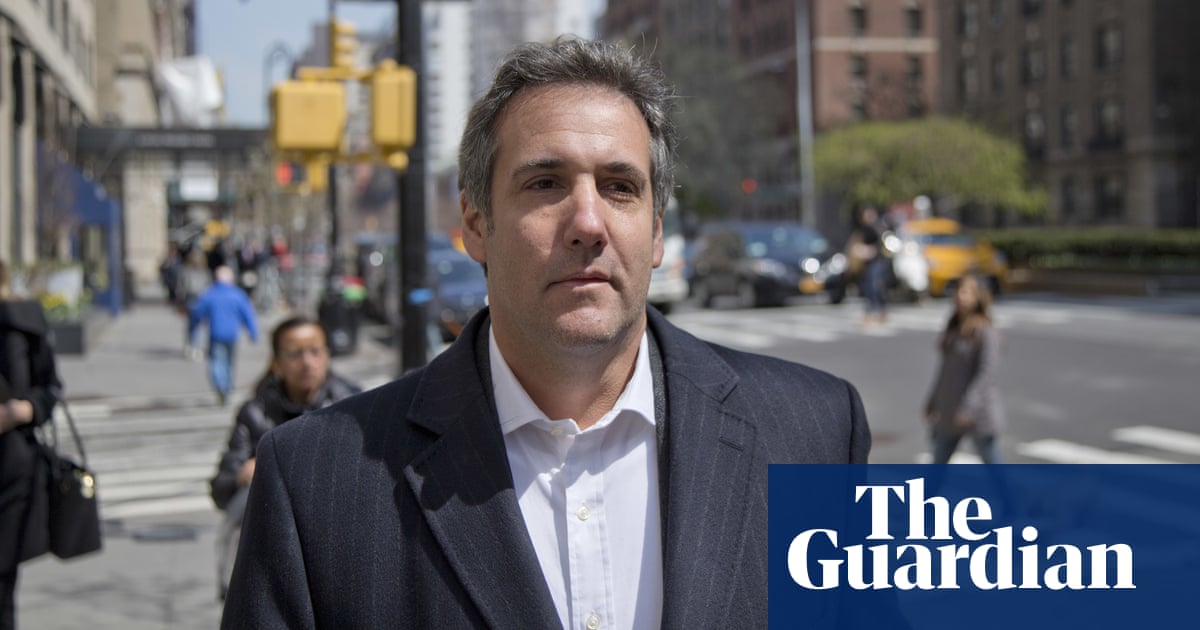
Michael Cohen, Donald Trumps former lawyer and right-hand-man, reportedly faces a federal investigation into possible bank and tax fraud relating to more than $20m in loans.
The New York Times reported that federal investigators in Manhattan were reaching the end of their inquiries and were considering filing charges by the end of August. According to the newspaper, their focus was falling on multi-million dollar loans Cohen received from two New York banks as well as on income his family gained from the citys yellow taxi business.
Federal investigators were also homing in on Cohens role in arranging hush money for two women who alleged affairs with Trump before the 2016 presidential election. The pay-offs might have constituted a breach of campaign finance law, the New York Times reported.
The darkening cloud of federal prosecutorial interest amid possible imminent charges are likely to substantially crank up pressure on Cohen to co-operate with the on-going investigation of special counsel Robert Mueller. That probe is reaching a critical stage as Mueller seeks to determine whether collusion took place between the Trump campaign and Russia to sway the outcome of the 2016 election.
Mueller is facing mounting calls to bring his inquiry to a rapid end before campaigning for the November midterm elections kicks off. Given those demands, any charges against Cohen are likely to be brought by the end of this month or delayed until after election day on 6 November.
Cohen has been drawn into the legal purview of both Mueller and other federal investigators since his office and home were searched in April. Since then he has given strong hints that he is prepared to co-operate with prosecutors in exchange for lenient treatment.
In July, one of Cohens legal team Lanny Davis released to the media a tape in which the attorney could be heard in discussions with Trump. The two were deliberating over a $150,000 deal to buy the silence of a former Playboy model Karen McDougal to prevent her allegations of an affair emerging two months before the 2016 presidential election.
According to the New York Times, federal investigators are probing Cohens role in arranging hush money for McDougal. They are also interested in a $130,000 payment he helped make to the adult film actor Stephanie Clifford, aka Stormy Daniels, as a possible violation of campaign finance laws that restrict undisclosed donations.
The newspaper reported that the focus on possible bank fraud stemmed from the engagement of Cohen in the New York yellow cab industry. In 2014 he took out loans with two financial institutions using 32 taxi medallions owned by the attorney and his family as collateral.
The story of Cohens alleged legal peril dropped just hours after Trump went on a Twitter rampage in which he likened Mueller to Joseph McCarthy, the Wisconsin senator who led the 1950s clampdown on so-called un-American activities.
We are now in period with Mueller and his gang that make Joseph McCarthy look like a baby! Trump tweeted.
Original Article : HERE ; This post was curated & posted using : RealSpecific
=>
***********************************************
Read More Here: Michael Cohen under investigation for $20m bank fraud report
************************************
=>
Sponsored by SmartQuotes - Your daily smart quote
=>
This article was searched, compiled, delivered and presented using RSS Masher & TrendingTraffic
=>>
Michael Cohen under investigation for $20m bank fraud report was originally posted by Viral News Feed 14
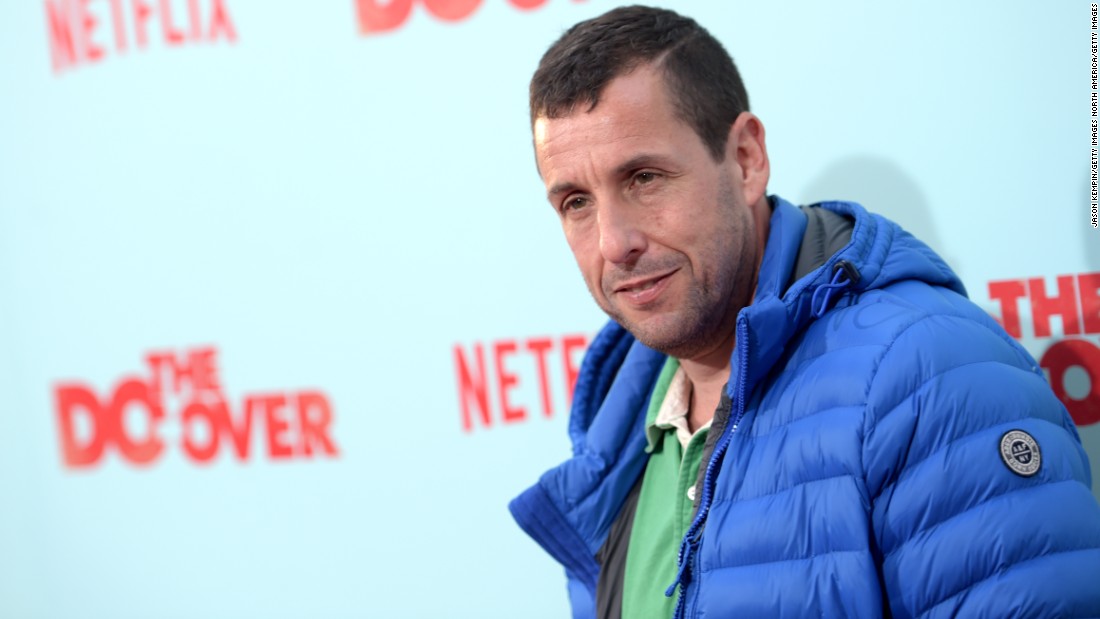
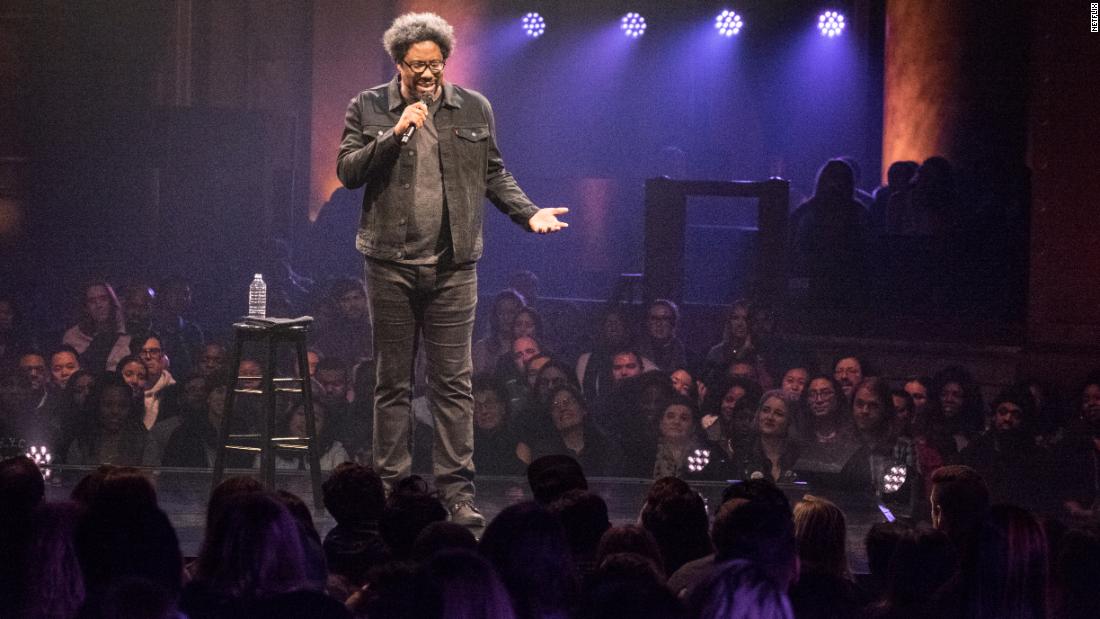
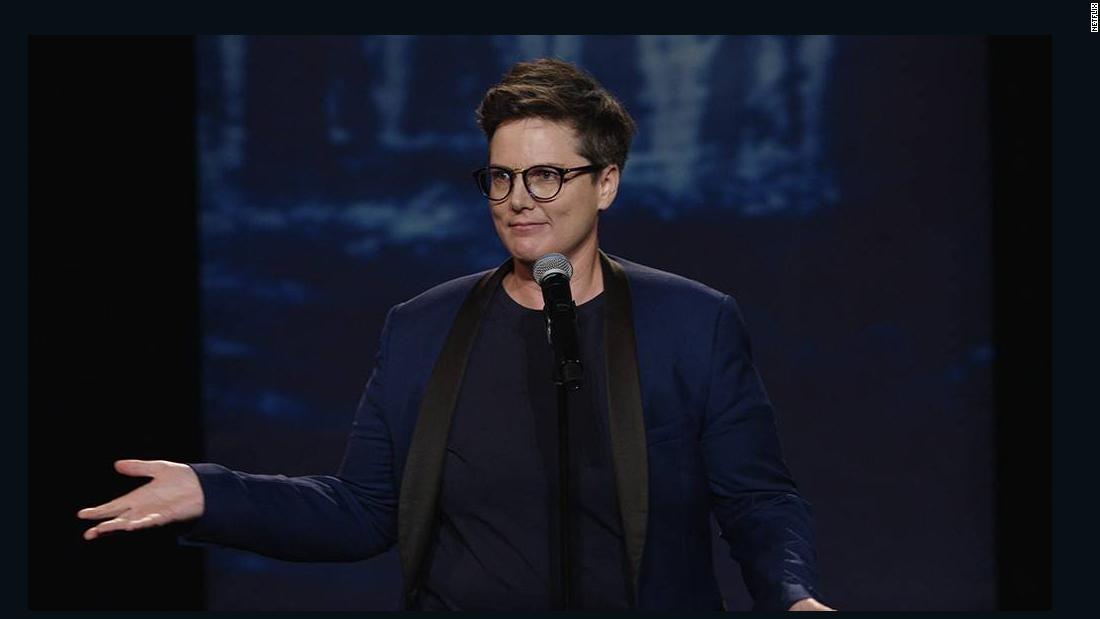
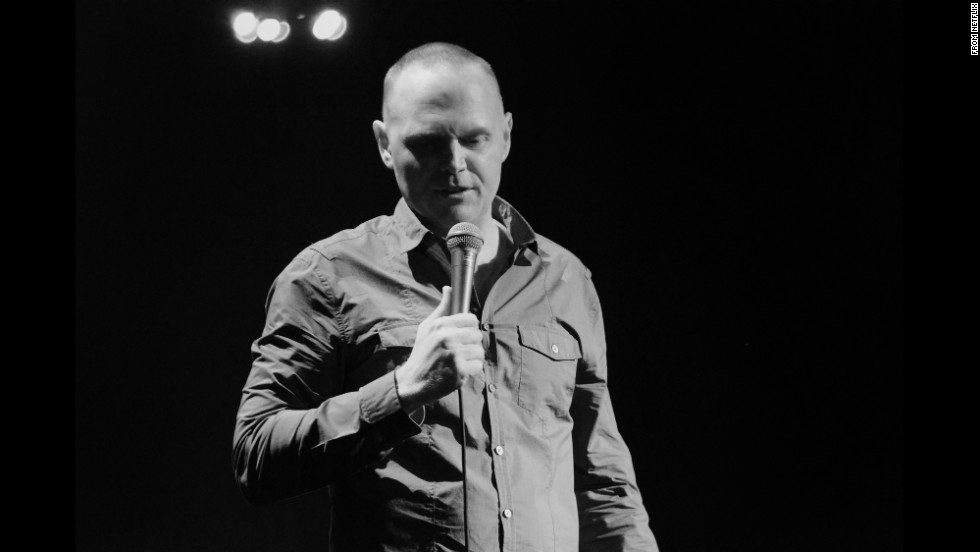
Is Netflix the new king of stand-up comedy?

(CNN)For fans of stand-up comedy, this decade has been a dream come true.

The power to elevate


Big coups

Turning point

Flooding the market

Original Article : HERE ; This post was curated & posted using : RealSpecific
=>
***********************************************
Post Source Here: Is Netflix the new king of stand-up comedy?
************************************
=>
Sponsored by our friends from Met001.biz
=>
This article was searched, compiled, delivered and presented using RSS Masher & TrendingTraffic
=>>
Is Netflix the new king of stand-up comedy? was originally posted by Viral News Feed 14
Trump rage-tweets Google alleging search bias
While several tech giants have found themselves in President Trump’s crosshairs since he took office, he has just unleashed what looks to be his most sustained attack on Google to date — firing off a couple of tweets at ~5.30am Washington DC time to rail against what he claims is algorithmic bias in the results the search engine serves up if someone types in “Trump News”.
No, the president did not use the four-syllable word “algorithmic”. But presumably he hadn’t even inhaled his first Coke of the day yet.
In his rage tweets, Trump makes the specific allegation that “96% of results on “Trump News” are from National Left-Wing Media”, without citing his source for the claimed datapoint. He then makes the further unsubstantiated claim that: “Google & others are suppressing voices of Conservatives and hiding information and news that is good.”
The Guardian suggests the 96% claim is a reference to an article posted at the weekend by the website PJ Media whose self-described “not-scientific” study of the top 100 Google News results for the search term “Trump” apparently suggested “a pattern of bias against right-leaning content”.
Trump ends the pair of tweets with a warning that the “situation will be addressed” — without specifying exactly what he plans to do. Which is pretty much trademark Trump Twitter policy-on-the-hoofing. Even as the wider political context around his administration, with whispers of impeachment in the air, implies that any loud public complaints by Trump about negative headlines related to himself are an attempt to distract attention from the legal hot waters now boiling around him. But whatevs.
Here are the tweets in all their rage-filled glory:
Google search results for “Trump News” shows only the viewing/reporting of Fake New Media. In other words, they have it RIGGED, for me & others, so that almost all stories & news is BAD. Fake CNN is prominent. Republican/Conservative & Fair Media is shut out. Illegal? 96% of…
— Donald J. Trump (@realDonaldTrump) August 28, 2018
….results on “Trump News” are from National Left-Wing Media, very dangerous. Google & others are suppressing voices of Conservatives and hiding information and news that is good. They are controlling what we can & cannot see. This is a very serious situation-will be addressed!
— Donald J. Trump (@realDonaldTrump) August 28, 2018
We’ve reached out to Google for comment. Update: The company has now emailed us a statement rebutting any suggestion that its search results are biased and/or manipulated to reflect any political sentiment.
A Google spokesperson told us:
When users type queries into the Google Search bar, our goal is to make sure they receive the most relevant answers in a matter of seconds. Search is not used to set a political agenda and we don’t bias our results toward any political ideology. Every year, we issue hundreds of improvements to our algorithms to ensure they surface high-quality content in response to users’ queries. We continually work to improve Google Search and we never rank search results to manipulate political sentiment.
Ironically, testing out a search for “Trump News” after Trump’s Google flaming tweets, I was served the below result, with the well-known right wing news organization Fox News bagging the very first result in the Top Stories slot, so er… 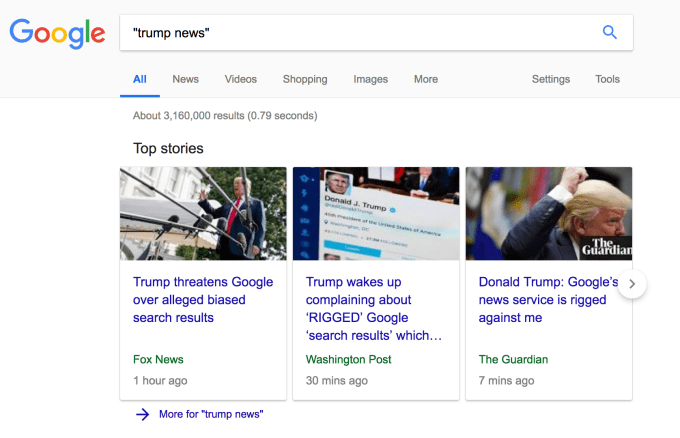
It’s unclear whether Trump is aware that Google search results can vary depending on the individual doing the searching. And, well, if Trump is seeing lots of bad news about himself (when he searches for news about himself) let’s just say we’re sure that Freud would have had a field day unpicking the knotted implications of Trump having such navel-gazing obsession with news sources he continually professes to hate and claims are “fake”. But, again, whatevs.
Of course most of what Trump is claiming here is flagrant nonsense — especially as his cancerous catchphrase of ‘fake news’ gets liberally slapped on anything he disagrees with, regardless of whether it’s true or not.
But one thing he’s saying is more or less true: Google is arguably “controlling what we can & cannot see”, given the company has a dominant share of the search market in the West (and a massively dominant one in Europe), and that most Internet users will never click beyond page one of the search results it serves. Or even browse beyond the top few results.
So, essentially, the hierarchies of information that Google’s algorithms create can and do surface or sediment information. Or, in other words, if it’s not on page one of Google it’s barely there.
Another example of Google’s power over what can and cannot be seen: In Europe, in recent years, the company now selectively de-indexes certain search results related to individuals on request (after it has reviewed a request and made a decision), in order to comply with a legal ruling by the EU’s top court (the so-called ‘right to be forgotten‘) — making it less likely that a specific data-point about a non-public individual will be broadly visible in the region.
The fact that a single company has such power over the accessibility of information (and potential to shape opinion) should concern us.
Especially as Google’s algorithmic engines are proprietary black boxes and there is no or little independent oversight of whether its information shaping is fair or even appropriate. (Again in Europe the company has been charged with promoting its own products in shopping related searches over and above rivals — and has had to make changes to the product search results it displays to comply with the antitrust ruling, though it disputes and is legally appealing the regulator’s decision.)
So Trump has at least correctly identified that Google can and does wield huge power via the popularity of its information retrieval platform.
Even as the claim he’s also selectively, self-interestedly amplifying — i.e. ‘96% biased’ — is entirely unsubstantiated, having been based on a single non-scientific survey carried out by an American conservative news blog. So judge appropriately.
Above that, the notion that any commercial company in the West, let alone one so prominent and mainstream as Google, would knowingly and systematically embed political bias into its algorithms to make them less useful for a very large swathe of its potential users is, frankly, ridiculous.
If anything, tech platforms tend to have the opposite problem; They serve up too tightly personalized stuff, risking shrinking users’ ideological horizons by feeding people a political mono-diet. (Which may help explain the Trump phenomenon itself, but I digress.)
Nonetheless, the president has continued to make tech firms his Twitter punchbags. Just last month, for example, he accused Twitter of “shadow banning” Republican users. A claim the company quickly denied, writing: “We do not shadow ban. You are always able to see the tweets from accounts you follow (although you may have to do more work to find them, like go directly to their profile). And we certainly don’t shadow ban based on political viewpoints or ideology.”
Safe to say, as the headlines about Trump get worse Trump’s rage will grow and the tweets will surely flow.
Update: The Hill is reporting that White House economic adviser Larry Kudlow, pressed by reporters about the administration’s intentions in the wake of Trump’s tweets, said it’s “taking a look” at potentially regulating Google.
Original Article : HERE ; This post was curated & posted using : RealSpecific
=>
***********************************************
See Full Article Here: Trump rage-tweets Google alleging search bias
************************************
=>
Sponsored by SmartQuotes - Your daily smart quote
=>
This article was searched, compiled, delivered and presented using RSS Masher & TrendingTraffic
=>>
Trump rage-tweets Google alleging search bias was originally posted by Viral News Feed 14
Distributed teams are rewriting the rules of office(less) politics
When we think about designing our dream home, we don’t think of having a thousand roommates in the same room with no doors or walls. Yet in today’s workplace where we spend most of our day, the purveyors of corporate office design insist that tearing down walls and bringing more people closer together in the same physical space will help foster better collaboration while dissolving the friction of traditional hierarchy and office politics.
But what happens when there is no office at all?
This is the reality for Jason Fried, Founder and CEO of Basecamp, and Matt Mullenweg, Founder and CEO of Automattic (makers of WordPress), who both run teams that are 100% distributed across six continents and many time zones. Fried and Mullenweg are the founding fathers of a movement that has inspired at least a dozen other companies to follow suit, including Zapier, Github, and Buffer. Both have either written a book, or have had a book written about them on the topic.
For all of the discussions about how to hire, fire, coordinate, motivate, and retain remote teams though, what is strangely missing is a discussion about how office politics changes when there is no office at all. To that end, I wanted to seek out the experience of these companies and ask: does remote work propagate, mitigate, or change the experience of office politics? What tactics are startups using to combat office politics, and are any of them effective?
“Can we take a step back here?”
Office politics is best described by a simple example. There is a project, with its goals, metrics, and timeline, and then there’s who gets to decide how it’s run, who gets to work on it, and who gets credit for it. The process for deciding this is a messy human one. While we all want to believe that these decisions are merit-based, data-driven, and objective, we all know the reality is very different. As a flood of research shows, they come with the baggage of human bias in perceptions, heuristics, and privilege.
Office politics is the internal maneuvering and positioning to shape these biases and perceptions to achieve a goal or influence a decision. When incentives are aligned, these goals point in same direction as the company. When they don’t, dysfunction ensues.
Perhaps this sounds too Darwinian, but it is a natural and inevitable outcome of being part of any organization where humans make the decisions. There is your work, and then there’s the management of your coworker’s and boss’s perception of your work.
There is no section in your employee handbook that will tell you how to navigate office politics. These are the tacit, unofficial rules that aren’t documented. This could include reworking your wardrobe to match your boss’s style (if you don’t believe me, ask how many people at Facebook own a pair of Nike Frees). Or making time to go to weekly happy hour not because you want to, but because it’s what you were told you needed to do to get ahead.
One of my favorite memes about workplace culture is Sarah Cooper’s “10 Tricks to Appear Smart in Meetings,” which includes…
- Encouraging everyone to “take a step back” and ask “what problem are we really trying to solve”
- Nodding continuously while appearing to take notes
- Stepping out to take an “important phone call”
- Jumping out of your seat to draw a Venn diagram on the whiteboard
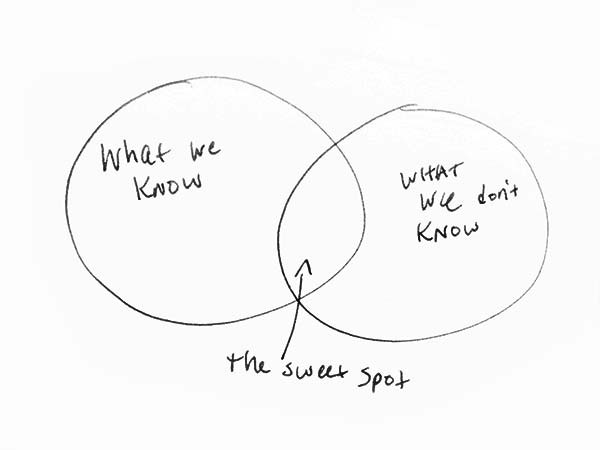
Sarah Cooper, The Cooper Review
These cues and signals used in physical workplaces to shape and influence perceptions do not map onto the remote workplace, which gives us a unique opportunity to study how office politics can be different through the lens of the officeless.
Friends without benefits
For employees, the analogy that coworkers are like family is true in one sense — they are the roommates that we never got to choose. Learning to work together is difficult enough, but the physical office layers on the additional challenge of learning to live together. Contrast this with remote workplaces, which Mullenweg of Automattic believes helps alleviate the “cohabitation annoyances” that come with sharing the same space, allowing employees to focus on how to best work with each other, versus how their neighbor “talks too loud on the phone, listens to bad music, or eats smelly food.”
Additionally, remote workplaces free us of the tyranny of the tacit expectations and norms that might not have anything to do with work itself. At an investment bank, everyone knows that analysts come in before the managing director does, and leave after they do. This signals that you’re working hard.
Basecamp’s Fried calls this the “presence prison,” the need to be constantly aware of where your coworkers are and what they are doing at all times, both physically and virtually. And he’s waging a crusade against it, even to the point of removing the green dot on Basecamp’s product. “As a general rule, nobody at Basecamp really knows where anyone else is at any given moment. Are they working? Dunno. Are they taking a break? Dunno. Are they at lunch? Dunno. Are they picking up their kid from school? Dunno. Don’t care.”
There is credible basis for this practice. A study of factory workers by Harvard Business School showed that workers were 10% to 15% more productive when managers weren’t watching. This increase was attributed to giving workers the space and freedom to experiment with different approaches before explaining to managers, versus the control group which tended to follow prescribed instructions under the leery watch of their managers.
Remote workplaces experience a similar phenomenon, but by coincidence. “Working hard” can’t be observed physically so it has to be explained, documented, measured, and shared across the company. Cultural norms are not left to chance, or steered by fear or pressure, which should give individuals the autonomy to focus on the work itself, versus how their work is perceived.
Lastly, while physical workplaces can be the source of meaningful friendships and community, recent research by the Wharton School of Business is just beginning to unravel the complexities behind workplace friendships, which can be fraught with tensions from obligations, reciprocity and allegiances. When conflicts arise, you need to choose between what’s best for the company, and what’s best for your relationship with that person or group. You’re not going to help Bob because your best friend Sally used to date him and he was a dick. Or you’re willing to do anything for Jim because he coaches your kid’s soccer team, and vouched for you to get that promotion.
In remote workplaces, you don’t share the same neighborhood, your kids don’t go to the same school, and you don’t have to worry about which coworkers to invite to dinner parties. Your physical/personal and work communities don’t overlap, which means you (and your company) unintentionally avoid many of the hazards of toxic workplace relationships.
On the other hand, these same relationships can be important to overall employee engagement and well-being. This is evidenced by one of the findings in Buffer’s 2018 State of Remote Work Report, which surveyed over 1900 remote workers around the world. It found that next to collaborating and communicating, loneliness was the biggest struggle for remote workers.
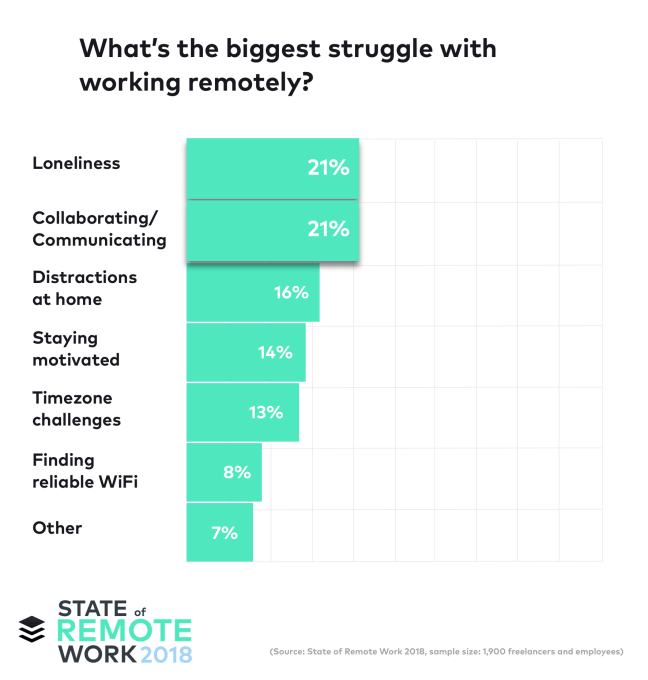
Graph by Buffer (State of Remote Work 2018)
So while you may be able to feel like your own boss and avoid playing office politics in your home office, ultimately being alone may be more challenging than putting on a pair of pants and going to work.
Feature, not a bug?
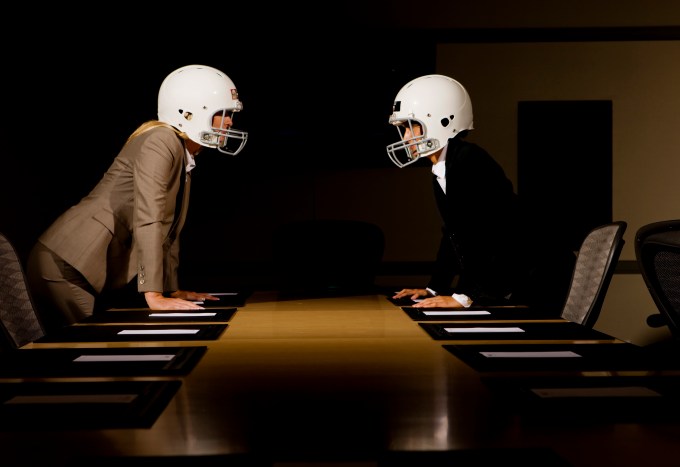
Physical offices can have workers butting heads with each other. Image by UpperCut Images via Getty Images.
For organizations, the single biggest difference between remote and physical teams is the greater dependence on writing to establish the permanence and portability of organizational culture, norms and habits. Writing is different than speaking because it forces concision, deliberation, and structure, and this impacts how politics plays out in remote teams.
Writing changes the politics of meetings. Every Friday, Zapier employees send out a bulletin with: (1) things I said I’d do this week and their results, (2) other issues that came up, (3) things I’m doing next week. Everyone spends the first 10 minutes of the meeting in silence reading everyone’s updates.
Remote teams practice this context setting out of necessity, but it also provides positive auxiliary benefits of “hearing” from everyone around the table, and not letting meetings default to the loudest or most senior in the room. This practice can be adopted by companies with physical workplaces as well (in fact, Zapier CEO Wade Foster borrowed this from Amazon), but it takes discipline and leadership to change behavior, particularly when it is much easier for everyone to just show up like they’re used to.
Writing changes the politics of information sharing and transparency. At Basecamp, there are no all-hands or town hall meetings. All updates, decisions, and subsequent discussions are posted publicly to the entire company. For companies, this is pretty bold. It’s like having a Facebook wall with all your friends chiming in on your questionable decisions of the distant past that you can’t erase. But the beauty is that there is now a body of written decisions and discussions that serves as a rich and permanent artifact of institutional knowledge, accessible to anyone in the company. Documenting major decisions in writing depoliticizes access to information.
Remote workplaces are not without their challenges. Even though communication can be asynchronous through writing, leadership is not. Maintaining an apolitical culture (or any culture) requires a real-time feedback loop of not only what is said, but what is done, and how it’s done. Leaders lead by example in how they speak, act, and make decisions. This is much harder in a remote setting.
A designer from WordPress notes the interpersonal challenges of leading a remote team. “I can’t always see my teammates’ faces when I deliver instructions, feedback, or design criticism. I can’t always tell how they feel. It’s difficult to know if someone is having a bad day or a bad week.”
Zapier’s Foster is also well aware of these challenges in interpersonal dynamics. In fact, he has written a 200-page manifesto on how to run remote teams, where he has an entire section devoted to coaching teammates on how to meet each other for the first time. “Because we’re wired to look for threats in any new situation… try to limit phone or video calls to 15 minutes.” Or “listen without interrupting or sharing your own stories.” And to “ask short, open ended questions.” For anyone looking for a grade school refresher on how to make new friends, Wade Foster is the Dale Carnegie of the remote workforce.
To office, or not to office
What we learn from companies like Basecamp, Automattic, and Zapier is that closer proximity is not the antidote for office politics, and certainly not the quick fix for a healthy, productive culture.
Maintaining a healthy culture takes work, with deliberate processes and planning. Remote teams have to work harder to design and maintain these processes because they don’t have the luxury of assuming shared context through a physical workspace.
The result is a wealth of new ideas for a healthier, less political culture — being thoughtful about when to bring people together, and when to give people their time apart (ending the presence prison), or when to speak, and when to read and write (to democratize meetings). It seems that remote teams have largely succeeded in turning a bug into a feature. For any company still considering tearing down those office walls and doors, it’s time to pay attention to the lessons of the officeless.
Original Article : HERE ; This post was curated & posted using : RealSpecific
=>
***********************************************
Article Source Here: Distributed teams are rewriting the rules of office(less) politics
************************************
=>
Sponsored by FreePLRArticles.biz
=>
This article was searched, compiled, delivered and presented using RSS Masher & TrendingTraffic
=>>
Distributed teams are rewriting the rules of office(less) politics was originally posted by Viral News Feed 14
Saturday, September 1, 2018
The head of one of Americas biggest retailers just banned plastic bags in a stunning announcement.

The average time a person uses a plastic grocery bag is about 12 minutes.
After being tossed in the garbage, it makes its way to a dump or possibly the ocean, where it will slowly bio degrade for 500 years.
But the plastic never really goes away. It breaks down into tiny fragments called microplastics that can carry toxins and enter our bloodstreams.
If the world fails reduce its plastic consumption our oceans are in danger of degrading into a toxic plastic soup.
Kroger, America’s second-largest retailer, just took a huge step to reduce the country's plastic consumption.
On Thursday, August 23, the company announced it would stop providing plastic checkout bags to its customers by 2025.
“The plastic shopping bag’s days are numbered,” its CEO, Rodney McMullen, wrote in a USA Today op-ed.
Photo by Neilson Barnard/Getty Images for New York Times.
The company’s goal is to transition its customers over to using reusable shopping bags.
Kroger owns nearly 2,800 stores in 35 states and the District of Columbia, including: Cala Foods, City FoodsCo, Fred Meyer Stores, Fry's, Metro Market, Pick 'n Save, Ralphs, Food 4 Less, and Smith's Food and Drug.
According to Kroger, the ban would eliminate 123 million pounds of garbage sent to landfills each year. This would quadruple the amount it currently saves through recycling.
“Our customers have told us it makes no sense to have so much plastic only to be used once before being discarded – And they’re exactly right,” McMullen wrote.
Kroger’s announcement comes at a time when state and local governments are considering legislation to either ban or protect plastic grocery bags.
California and Hawaii have banned single-use plastic grocery bags, while Arizona, Florida, Idaho, Indiana, Iowa, Michigan, Minnesota, Mississippi, Missouri, and Wisconsin have enacted laws to prevent local governments from enacting bans.
Plastic bag facts:
- 100 billion plastic bags are used by Americans every year which require 12 million barrels of oil to manufacture. Tied together, they would reach around the Earth’s equator 773 times!
- Nearly 2 million single-use plastic bags are distributed worldwide every minute.
- The average American family takes home almost 1,500 plastic shopping bags a year.
- 100,000 marine animals are killed by plastic bags annually.
Plastic bag bans have been proven to reduce plastic litter and ocean pollution.
A plastic bag tax levied in Ireland in 2002 has reportedly led to a 95% percent reduction in plastic bag litter in the country. In 2011, San Jose, California banned plastic bags, resulting in 89% percent reduction in bags found in the storm drains, 60% in the creeks and rivers, and 59% in city streets and neighborhoods.
The California ban, which took effect in late 2016, is already yielding positive results. According to the Los Angeles Times, “Plastic bags (both the banned and the legal variety) accounted for 3.1% of the litter collected from the state's beaches during the 2017 Coastal Cleanup Day, down from to 7.4% in 2010."
How you can help
Even if your local grocery store still hands out bags, you can reduce your own plastic consumption by bringing your own reusable one. Not only will you reduce your own waste, but you’ll be a good example to fellow shoppers and may cause them to rethink habits.
Original Article : HERE ; This post was curated & posted using : RealSpecific
=>
***********************************************
Read More Here: The head of one of Americas biggest retailers just banned plastic bags in a stunning announcement.
************************************
=>
Sponsored by SmartQuotes - Your daily smart quote
=>
This article was searched, compiled, delivered and presented using RSS Masher & TrendingTraffic
=>>
The head of one of Americas biggest retailers just banned plastic bags in a stunning announcement. was originally posted by Viral News Feed 14
5 films to follow this awards movie season
/https%3A%2F%2Fblueprint-api-production.s3.amazonaws.com%2Fuploads%2Fcard%2Fimage%2F836511%2F5320e4e1-abd9-4860-9cdc-047f17d575b6.jpg "Damien Chazelle")
Welcome to our 2018 fall movie preview. We'll be coming at you all week with the movies you need to know over the next few months – including the emotional, the offbeat, the family-friendly, and, today, the awards-worthy.
We can't really talk about fall movie season without talking about awards movie season. This is the time of year when studios roll out their most promising contenders, hoping to keep them fresh in the minds of voters when it comes time to cast their ballots for the SAGs or the Spirits or the Oscars.
It goes without saying that it's really too early at this point to say which titles will actually go the distance. If it were that easy to guess, office Oscar pools wouldn't be a thing. But if you love to talk statues, it's never too early to start sizing up the competitors.
Here's what to watch if you're ready for awards season...
... and you want to root for a badass: Colette (September 21)
Keira Knightley has two Oscar nominations under her belt already, and could well add a third this fall with the historical drama Colette. The real reason to watch this movie, though, is that it looks just plain fascinating. It's the (true) story of a novelist in Belle Epoque Paris, who breaks away from the societal constraints of her time to pursue her passions – romantic, professional, and otherwise.
... and you thought Timothée was robbed: Beautiful Boy (October 12)
Timothée Chalamet lost out on the Academy Award this year, thanks to Gary Oldman and his magnificent prosthetics in Darkest Hour. But he could just have another shot next year. Beautiful Boy stars Chalamet as a young man struggling with meth addiction, and Steve Carell as the father who wants so desperately to save him. It's directed Felix Van Groeningen, whose Broken Circle Breakdown was an Oscar-nominated heartbreaker, so yeah, you're gonna wanna bring tissues.
... and La La Land was your 2017 pick: First Man (October 12)
Damien Chazelle broke into the Best Picture race with both of his previous films, Whiplash and La La Land. Only a fool would bet against his newest one, First Man. Ryan Gosling plays Neil Armstrong, who's facing a lot of doubt and uncertainty ahead of the Apollo 11 mission, which we in 2018 already know will make him the first man to walk on the moon.
... and Pine is your Chris of choice: Outlaw King (November 9)
Did you know that none of the four core Chrises have ever been nominated for an Oscar? If anyone's gonna change that, though, it might be Pine, whose upcoming Outlaw King reunites him with David Mackenzie – director of the Best Picture-nominated Hell or High Water. Plus, watching him try a Scottish accent seems like its own reward.
... and you're not a stickler for historical accuracy: Mary Queen of Scots (December 7)
Let's just get this out of the way: Mary, Queen of Scots is not the movie to see for a history lesson. Mary and Elizabeth I never actually met, and certainly weren't IRL besties before turning into rivals. But it is the movie to see if you're interested in watching two towering talents (Margot Robbie and Saoirse Ronan) tear into each other, and especially if you've got anything invested in either of them racking up the statues this winter.
Each day this week, we'll roll out another bunch of picks for our fall movie preview. Come back to find out what to watch if ...
Monday: ... you want to feel some feels
Tuesday: ... you've got a taste for the offbeat
Wednesday: ... you're with the family
Thursday: ... you're ready for awards season
Friday: ... you just want to see the best of the best

Original Article : HERE ; This post was curated & posted using : RealSpecific
=>
***********************************************
See Full Article Here: 5 films to follow this awards movie season
************************************
=>
Sponsored by AMA News
=>
This article was searched, compiled, delivered and presented using RSS Masher & TrendingTraffic
=>>
5 films to follow this awards movie season was originally posted by Viral News Feed 14